A story of generative AI in finance. With a happy ending.
A SWIFTFINANCE REAL LIFE CASE STUDY
AI in Finance
and its structural challenges

Code that no one could read or validate
The AI-generated scripts worked... most of the time. But when they produced unexpected results, no analyst was able to read the Python code to understand what it was actually doing.
The AI had generated complex logical transformations—conditional joins, data pivots, currency conversions—that no one on the team could validate or certify. The code was technically executable, but intellectually opaque.

Silent errors impossible to locate
The pipeline was running in the background, without structured logging or an alert mechanism. When the consolidated figures started to drift: slightly overstated margins, poorly eliminated intercompany charges, USD/CAD conversions applied twice for some accounts.
The team only discovered it when manually reconciling the results, often several days after closing. Tracing the cause was like detective work without clues: the code didn't document its own decisions.

A fragile model, broken with every change
As soon as a change occurred in either of the two ERPs, a new cost center, a department restructuring, a database schema update in NetSuite, the pipeline would collapse or silently produce incorrect data.
Repairing the script meant going back to the AI, asking it to correct code it had itself generated several weeks earlier, with no guarantee that the correction wouldn't introduce a new problem elsewhere. Each correction became an additional risk.

An invisible and undocumented liability
After several months, the team realized with horror that no one knew exactly what the system as a whole did. The scripts had been iterated, corrected, and duplicated. Conflicting versions coexisted.
An analyst had left the company, taking with him tacit knowledge of part of the pipeline. The system had become a black box maintained by an artificial intelligence that could not be questioned about its own past decisions.
SEE HOW SWIFTFINANCE CAN HELP PEOPLE LIKE YOU

Directrice Financière
We spent entire days trying to understand why the figures from the American subsidiary weren't adding up. We asked the AI to correct the script, it gave us a new version, and two weeks later, we found another problem that the correction had introduced. We had lost faith in our own data.
At that moment, I understood that we didn't have a skills problem, we had a data infrastructure problem.
Swiftfinance has allowed us to continue using AI, but this AI now reasons on clean, consolidated, documented, and auditable data.

CFO
I had to explain to the CEO and the board that our consolidated figures for the last six months were unreliable. That's not a conversation a CFO wants to have.
Generative AI can write code, but it cannot guarantee that this code does what accounting rules require. It can produce pipelines, but it cannot audit them, document them, or maintain them over time.
With Swiftfinance we learned that these responsibilities belong to a purpose-built financial infrastructure supported by a dedicated team, not to an LLM language model.
Why Swiftfinance is the foundation
for secure use of generative AI in Finance
Centralized financial analytical IA model ⚫︎ AI Reporting ⚫︎ Consolidate your information without AI ⚫︎ Manage your rules with transparency ⚫︎ Governance and conformity for a better AI
Multiply the power of AI tenfold without hallucinations
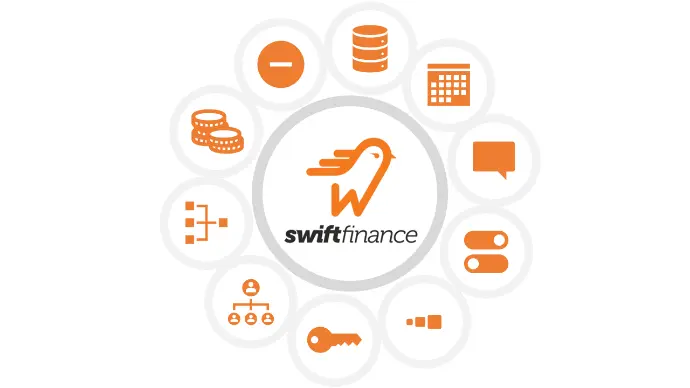
SwiftFinance offers a centralized financial model where every generated figure is traceable back to its source in the ERP, along with the applied transformation rule and the history of changes. The team can answer any question from an auditor or administrator in minutes, with a documented trail.
Flexible reporting assisted by AI
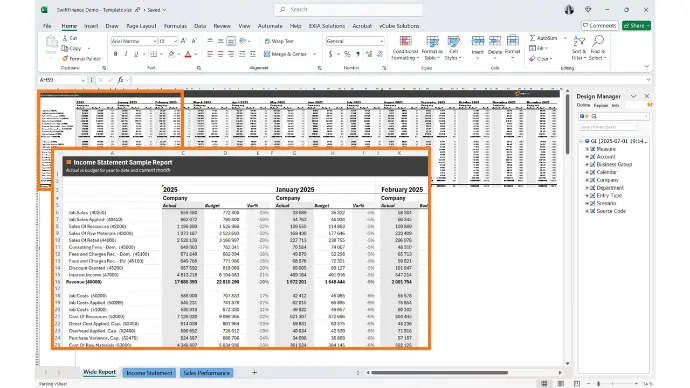
SwiftFinance offers easy and flexible financial reporting that uses AI to hide complexity, not to generate even more complex code to manage it. Analysts can focus more on leveraging data rather than improvising and playing IT games with undocumented scripts.

Resilience to change in ERPs
SwiftFinance offers specialized connectors to ensure automated and reliable transfer of source data. No undocumented custom scripts are used. No analyst has to spend their weekend debugging Python code.
Transparent consolidation rules
SwiftFinance offers applications that allow for centralized and secure management of all parameters related to data unification, transformation, validation, and normalization. No opaque, AI-generated scripts are required.
Strong governance to ensure AI compliance
SwiftFinance offers centralized control and auditing capabilities that ensure data is properly transformed and used by the right people in the right way.